Happily Ever After?
Should fairy tales have happy endings? Not always.
Stan Guthrie
3/4/20262 min read
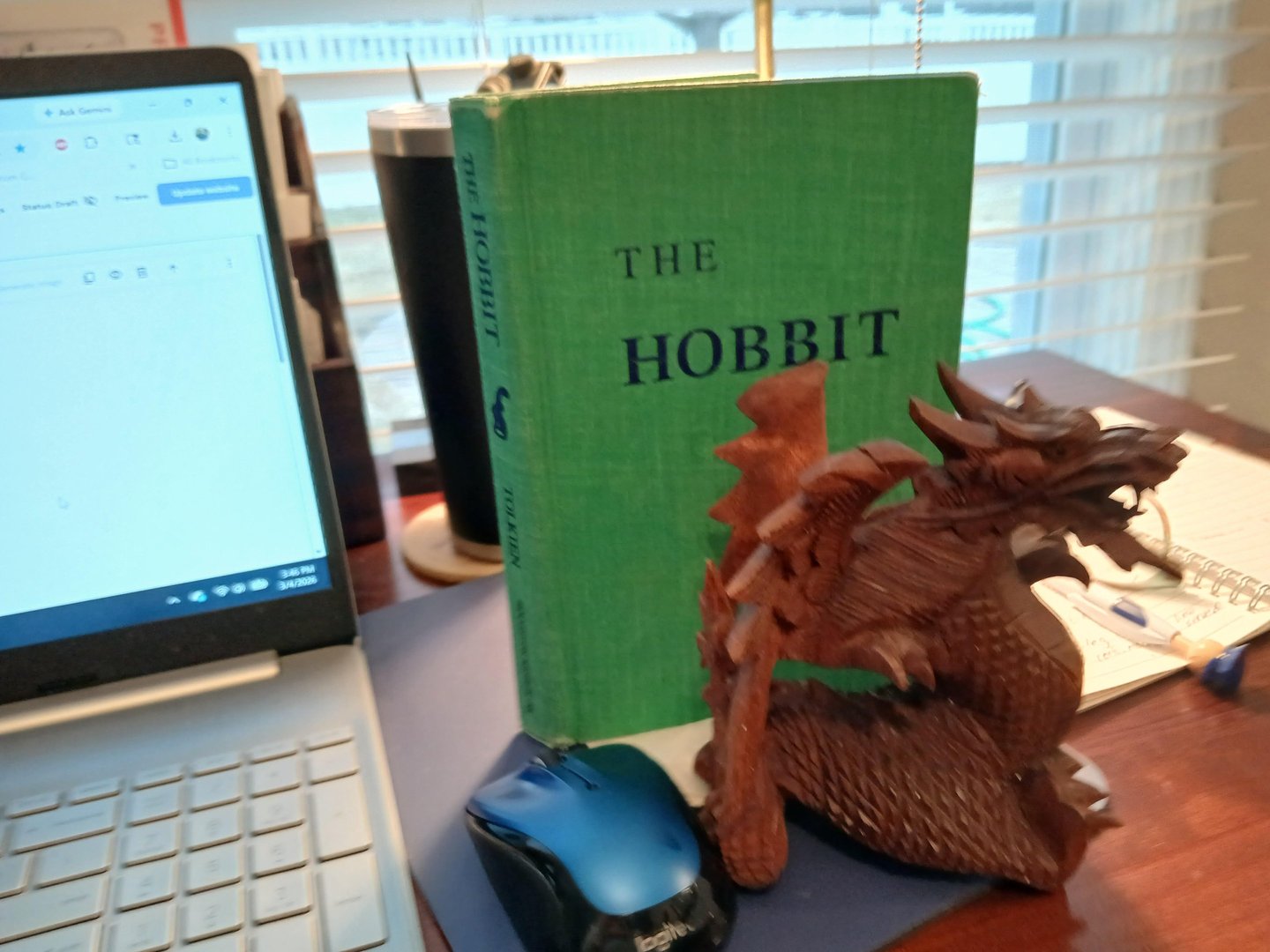
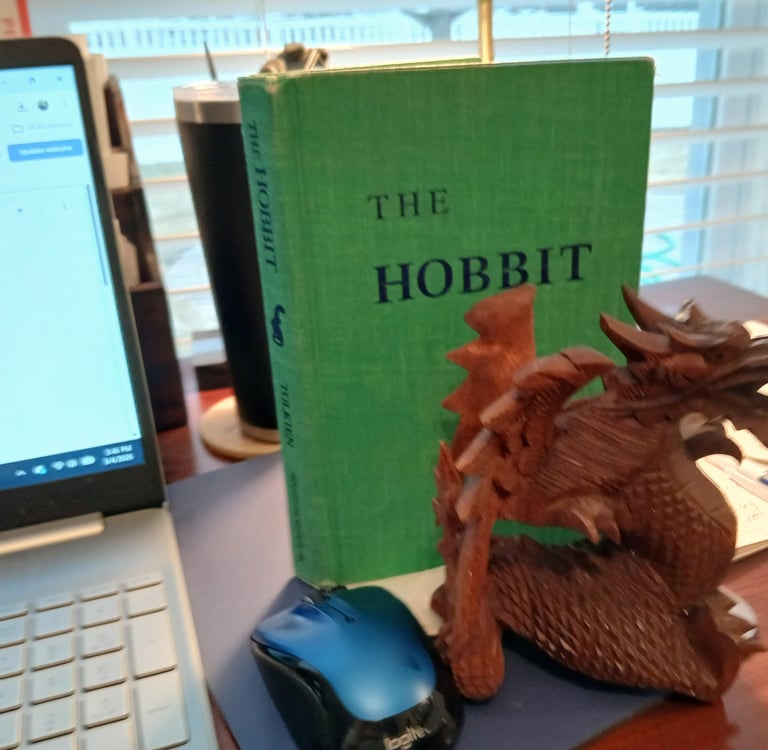
Two evenings ago, I finished reading my well-worn copy of The Hobbit by J.R.R. Tolkien for the umpteenth time. I mentioned in an earlier blog post that Tom and the Dragon features some similar themes. And indeed it does! In fact, in this latest re-reading, I uncovered far more than I had consciously remembered when writing my book. Tolkien's influence on my work (and on that of many other fantasy authors) is both deep and wide.
But that's not what this post is about.
Instead, I'd like to talk about Tolkien's ending of The Hobbit. The thing I noticed during this latest reading (spoiler alert) is how the denouement isn't exactly of the "and they lived happily ever after" variety. And that's okay!
I'll let something that C.S. Lewis scholar Jerry Root and I wrote some years ago about Tolkien's carefully considered approach. It's just as true today:
The first time Bilbo has to sleep on the hard ground rather than in the soft, feathery bed of his hobbit hole, he longs for home. When his provisions grow stale, he longs for his larder. When he faces danger from trolls, Bilbo longs for the seeming security of the Shire.
Eventually the adventures end, and Bilbo can go home. It is here that Tolkien works his greatest magic. When Bilbo returns, he discovers the Shire is no longer the place of his deepest longing. His relatives have declared him dead and are dividing up his belongings. When Bilbo tries to stop them, some declare him an imposter and refuse to return what they have taken. Tolkien is being very deliberate in seeking to awaken a longing for home. He shows that what we really want is transcendent. Earthly homes may awaken this longing, but they cannot satisfy it.
Sometimes we assume that all fairy tales, myths, and fantasy stories (especially those written for children) have happy endings, or at least they should. The reality is more complicated. If we leave the Disney versions of these stories to the side, we will discover that many fairy tales in the Western tradition, but far from all, have what we would consider happy endings.
Stories by the Brothers Grimm, Hans Christian Andersen, and others often give readers a happy conclusion—a marriage, rescue, transformation, or escape. But that conclusion, such as Bilbo's return to his hobbit hole, usually has strings attached, including suffering, disappointment, or even trauma and loss.
In resolving the plot of Tom and the Dragon, I did not shy away from tradeoffs and disappointments, believing that they give the story more poignancy and power. While the characters in the main did experience a restoration of happiness, almost no one escaped unscathed. Yes, I kept the suffering (if you can call it that) light and manageable, but I did not completely airbrush it from the story.
Victory, in art as in life, usually has a cost.
Tom and the Dragon is available on Amazon.com.